Getting Ready for Summer: Essential Boat Trailer Checks Before the Season
Summer's almost here and the boat's itching to get wet. Before your first launch, run through these trailer checks so the only thing you're worrying about at the ramp is where the fish are biting.
Ray — Alpha Trailers
Based in the Waikato, NZ
The trailer is the one thing that ruins a good boating day
Summer is what every Kiwi boatie waits for — long evenings, calm mornings, and a boat ramp that is finally worth the drive. But after months of sitting idle over winter, your trailer is the most likely thing to let you down on that first trip of the season. A seized bearing, a flat-spotted tyre, or a dead set of lights can turn a perfect day into a roadside headache before you have even wet the hull. The good news is that a proper pre-season check takes under an hour and catches almost everything that typically goes wrong.
Start with the bearings — the number one trailer failure
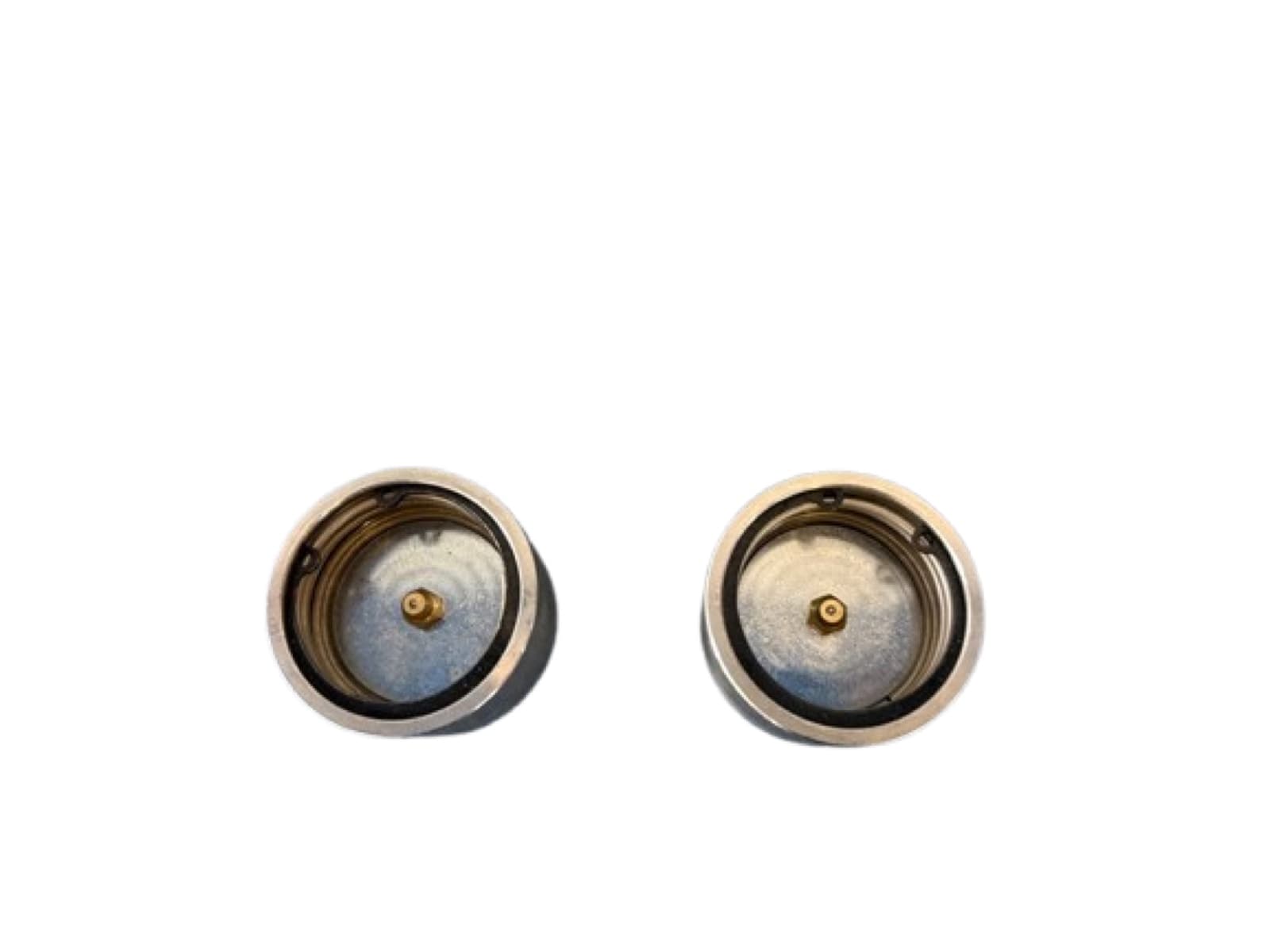
Wheel bearings are the single most common trailer breakdown in New Zealand, and a trailer that has sat unused all winter is prime for trouble. Jack up each wheel, spin it, and feel for any roughness, grinding, or noise. Grab the tyre at the top and bottom and rock it — any play means the bearings need attention. Repack or replace them before the season starts rather than discovering the problem 40km from the nearest town. If your trailer runs bearing buddies (standard on every Alpha trailer), give them a few pumps of marine grease to keep water out during those salt-water launches.
Check the tyres — including the spare
Trailer tyres that have sat in one spot for months are prone to cracking and flat spots, and the rubber degrades with age even if the tread looks fine. Check both trailer tyres for cracks in the sidewall, uneven wear, and correct pressure — a properly inflated tyre runs cooler and lasts longer on those long tow trips to the coast. Do not forget the spare: it is useless if it is flat or perished when you actually need it. If your tyres are more than five or six years old, consider replacing them regardless of tread, as trailer tyres fail from age as much as wear.
Test the lights and wiring
Corroded plugs and dead lights are one of the most common summer surprises, especially after a damp winter. Plug the trailer into your tow vehicle and check brake lights, indicators, and running lights all work. Look at the 7-pin plug and connectors for corrosion or green build-up, and give them a clean and a dab of dielectric grease if needed. Faulty trailer lights are not just a warrant issue — they are a safety risk and a common reason for getting pulled over on a busy holiday weekend.
Inspect the winch, strap, and safety chains
Your winch strap or rope is what holds the boat on the trailer at 100km/h, so it is worth a close look. Check the strap for fraying, the winch for smooth operation, and the bow hook and safety chain for wear or rust. Replace a frayed strap now — it is a cheap part and a catastrophic failure. Make sure the safety chains and shackles are in good order and correctly rated, and that the winch post and bow roller are holding the boat snug against the stops.
Look over the rollers, bunks, and frame
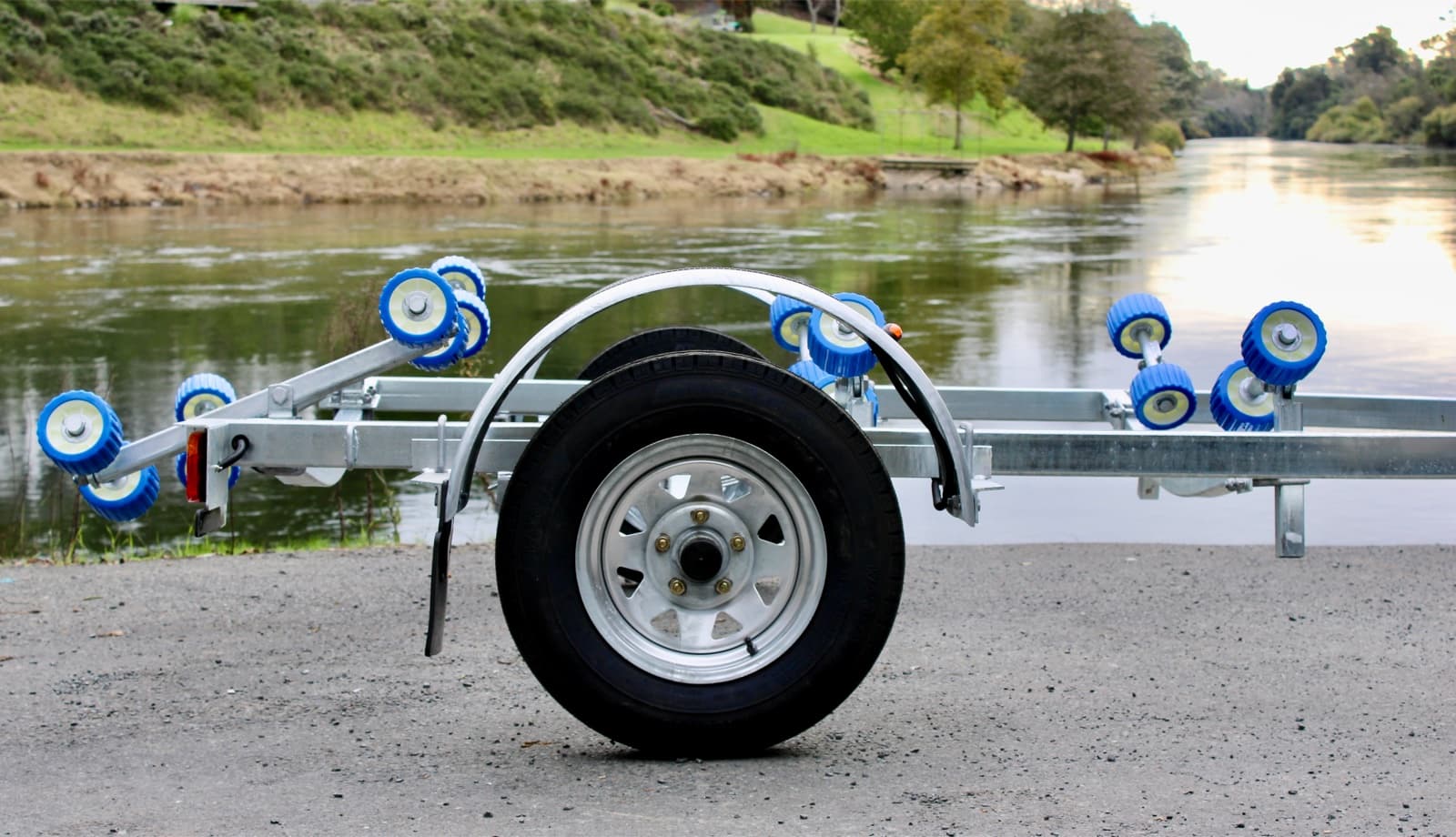
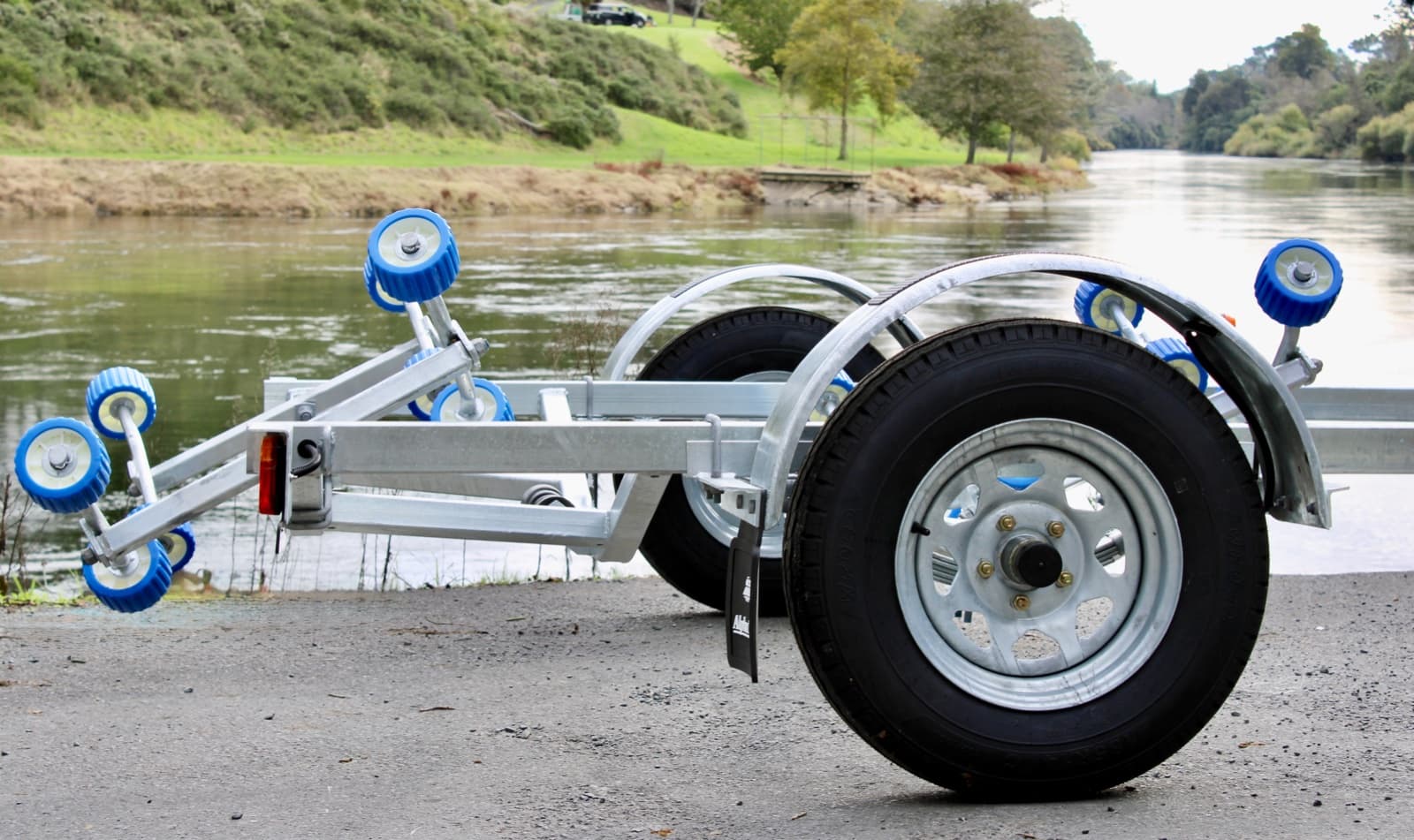
Walk around the trailer and check the rollers or bunks that support your hull. Rollers should spin freely without cracks or flat spots, and bunk carpet should be intact so it is not chafing the hull. Give the frame a once-over for any rust spots, loose bolts, or cracked welds — even on a hot-dip galvanised trailer, hardware and moving parts deserve a check. Treat any surface rust early and lubricate the coupling, jockey wheel, and any pivoting parts so everything moves freely.
Confirm your registration and WoF are current
It is easy to let trailer registration lapse over winter when the boat has not moved. Before your first trip, confirm both your registration and warrant of fitness are current — both are required for any trailer over 750kg gross on New Zealand roads. A quick check now saves an awkward conversation on the side of the highway when everyone else is heading to the ramp.
Do a dry run before the big day
If it has been a while, hitch up and tow the trailer around the block before you load the boat and commit to a long drive. Listen for any unusual noises, check the trailer tracks straight and true, and confirm the coupling is seated and locked with the safety chains attached. A five-minute dry run is the best way to catch a problem while you are still in the driveway rather than at the ramp with a queue behind you.
An hour now means a summer of easy launches
Spending an hour on your trailer before the season kicks off means it will be ready the moment the weather turns and you are itching to get out. If you would rather have the professionals handle it, the team at Alpha Trailers can help with a full pre-season service, bearings, tyres, brakes, and any parts you need to get summer-ready. Get in touch and we will make sure your trailer is the last thing you have to think about this summer.
Need help choosing a trailer?
Tell us your boat — make, model, length — and where you launch. We'll match the right Alpha trailer and send a quote within one business day.