How to Back a Boat Trailer: Step-by-Step for Beginners
Reversing a boat trailer is the skill every new boatie dreads. Here's a plain-English guide to the technique, the common mistakes, and how to get confident at the ramp fast.
Ray — Alpha Trailers
Based in the Waikato, NZ
Every boatie has been that person at the ramp
You know the one — jackknifed halfway down the concrete, cars backed up, everyone watching. It happens to almost every new trailer owner at least once. Reversing a boat trailer feels completely unnatural the first time you try it, and the pressure of a queue behind you does not help. The good news is it is a learnable skill, not a natural talent. Once you understand why the trailer behaves the way it does in reverse, it clicks — and within a few practice sessions you will be backing down confidently without thinking twice.
Understand why reversing feels backwards
The reason reversing a trailer is confusing is that the trailer steers from the rear pivot point, not from the front wheels. When you reverse a car on its own, you turn the wheel right and the back of the car goes right. With a trailer attached, it is the opposite — turn the wheel right and the trailer goes left. Your brain has to unlearn years of instinct. The single most useful mental trick is this: ignore the front of your car and watch only the trailer in your mirrors. Focus on where the back of the trailer is going, and steer to correct that, not to steer the car.
The one-hand technique that makes it easier
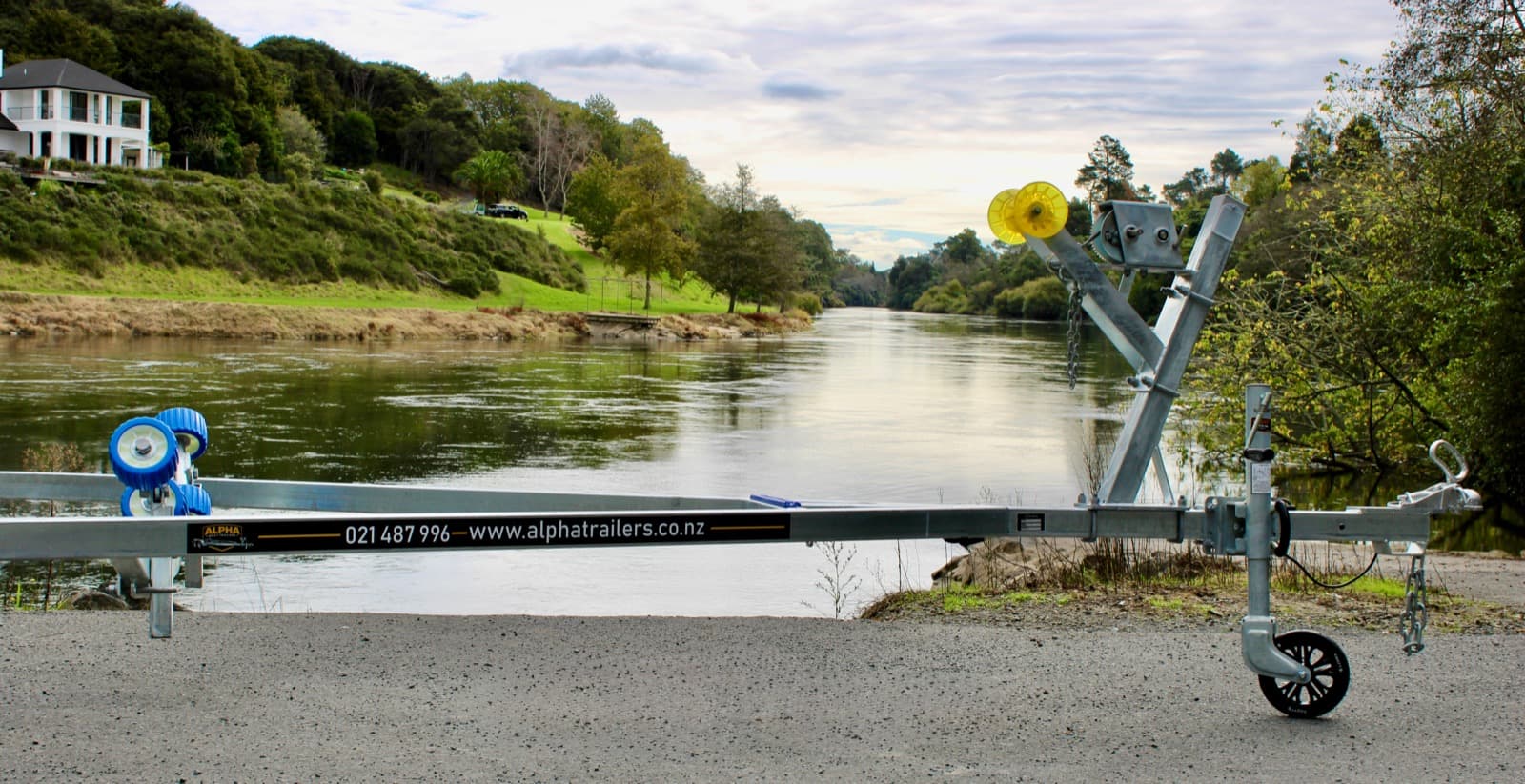
Most experienced trailer towers use a simple hand position trick: place your hand at the bottom of the steering wheel. Whichever direction you move that hand is the direction the trailer will go. Move your hand left, the trailer goes left. Move it right, the trailer goes right. It sounds too simple, but it works because it aligns your hand movement with what you actually want the trailer to do — rather than fighting the reversed logic of normal steering. Give it a go in an empty car park before you try it at a ramp for the first time.
Set yourself up before you get to the ramp
A lot of ramp stress comes from arriving unprepared. Before you back down, sort these things out in the car park at the top:
- —Remove the trailer's transom straps — leave only the bow winch strap attached
- —Pull the bungs (if your boat has them) before it hits the water
- —Check your lights are working — brake lights, indicators, reverse lights
- —Wind down the jockey wheel so it is not dragging, or remove it if it is removable
- —Disconnect the trailer's safety chains if your setup requires it at launch
- —If anyone is helping you, agree on hand signals before you start moving
Step-by-step: reversing down the ramp
Once you are lined up at the top of the ramp, here is the process to follow:
- —Position your tow vehicle so it is as straight as possible with the ramp centreline before you start reversing — a straight start makes everything easier
- —Wind down your windows so you can hear your spotter and see your mirrors clearly
- —Reverse slowly — much slower than feels necessary. Idle speed or less
- —Use small steering corrections. Big inputs cause big jackknives that are hard to recover
- —If the trailer starts going the wrong way, stop before correcting — it is easier to fix before the angle gets too large
- —Keep watching the trailer in both mirrors, not just one
- —Stop when the boat hull is over the water — you do not need the trailer fully submerged, just enough that the boat floats off the bunks or rollers
- —Apply your handbrake, hop out, and push the boat off the trailer from the bow
How to use a spotter
If someone is helping you, put them at the back corner of the trailer where they can see both the trailer and the ramp edges. Agree on hand signals before you start — left arm out means go left, right arm out means go right, both hands up means stop. The spotter's job is to guide the trailer, not the car. They should be watching where the trailer is tracking relative to the ramp edges and the water, not looking at your car. A good spotter gives early, calm corrections — not frantic waving when the trailer is already in trouble. And critically: always stop the moment you see the stop signal. Do not second-guess it.
The most common mistakes — and how to fix them
Understanding what goes wrong helps you recognise and correct it early:
- —Going too fast — the single biggest cause of jackknifes. Slow down. You cannot steer a trailer that is moving faster than walking pace
- —Over-correcting — one big input leads to another in the opposite direction and the trailer snakes. Use tiny movements and give the trailer time to respond
- —Watching the car instead of the trailer — always watch the trailer in your mirrors. The car will look after itself
- —Starting at an angle — if you are more than a few degrees off-line at the top, pull forward and straighten up before reversing. An angled start gets worse as you go
- —Jackknifing — if the trailer goes past about 45 degrees to the car, pull forward to straighten up and start again. Do not try to reverse out of a severe jackknife
Practice before you need it
The best time to practice reversing a trailer is not at a busy ramp on a Saturday morning. Find an empty car park — a school or sports ground on a weekend works well — and set up some cones or use painted park lines as guides. Practice straightforward reversing first, then gentle curves, then sharper turns. Twenty minutes in a car park will teach you more than a dozen stressful ramp attempts under pressure. Most people are surprised how quickly it starts to feel natural once the logic of it clicks. If you have just bought a new trailer and have not towed much before, do this before your first launch. It is well worth the half hour.
It gets easy fast
Reversing a trailer is genuinely one of those skills that feels impossible until suddenly it does not. Most people reach the point where they can back confidently into a ramp without much thought after five or six outings. The technique does not change — slow speed, small inputs, watch the trailer not the car, and use your spotter if you have one. If you are buying your first trailer and have questions about tow ball height, trailer length, or what setup suits your boat, give us a call. We are happy to talk through the practical side of towing as well as the trailer spec itself.
Need help choosing a trailer?
Tell us your boat — make, model, length — and where you launch. We'll match the right Alpha trailer and send a quote within one business day.